

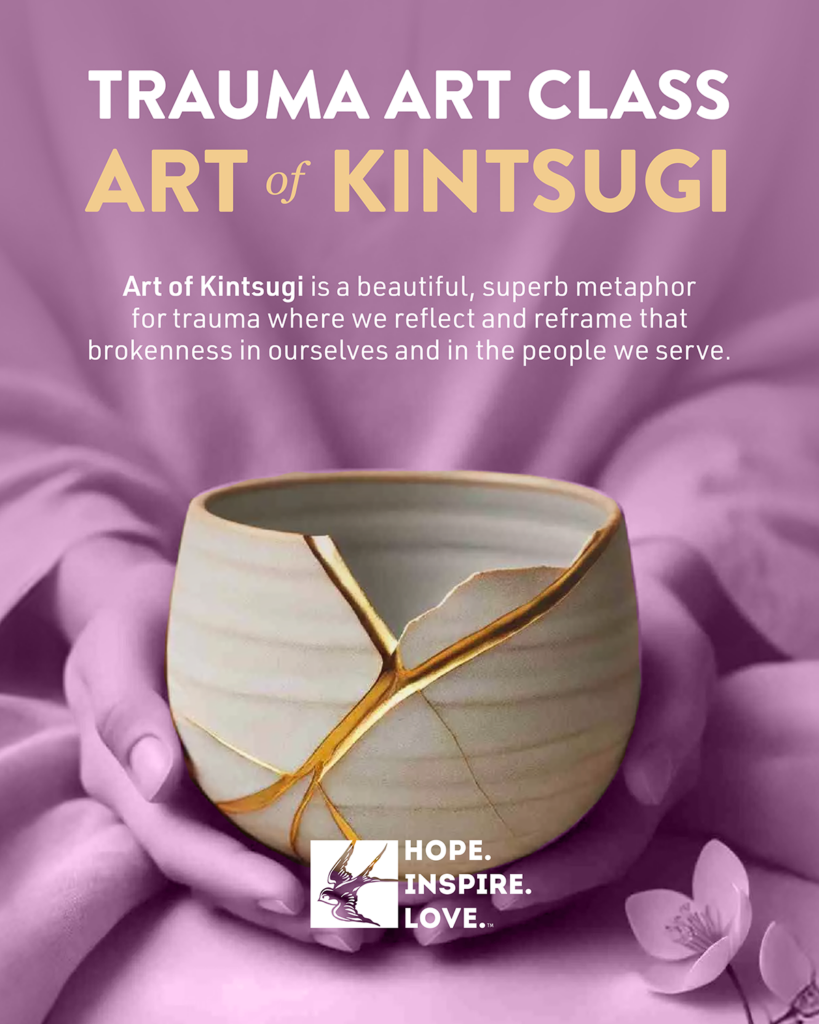
Art of Kintsugi – Trauma Art Class
Experience the art of Kintsugi—where broken pieces are made beautiful. In this hands-on workshop, you’ll create your own piece to take home, guided by Hope Inspire Love’s Trauma Artist, in a safe and encouraging environment. This class is open to the general public.
Each class is typically open to 8-10 participants.
Register for an Upcoming Class
Purchase a Gift Certificate for a Class
Trauma Art Class
What Should I Expect in the Class?
Our Hope Inspire Love Kintsugi trauma art therapy class uses the centuries-old Japanese art of repairing broken pottery with gold lacquer as a hands-on, symbolic metaphor for emotional healing and resilience.
The class is specifically designed as a therapeutic process for trauma recovery, helping participants reflect on and reframe personal brokenness in a safe, encouraging environment.
Our trained trauma-art facilitator will connect the concepts of trauma recovery—recognizing that emotional scars do not ruin a person, but rather become part of a unique and strong history. The class will help you reflect on personal boundaries, areas of vulnerability, or life transitions before you begin working with the physical materials of the pottery.
You will be given a small ceramic bowl and will break or crack pieces that can represent personal disruption, abuse, grief, or trauma in your life. The class weaves faith, worth, self-value, grace, and restoration as a process that can connect your personal journey towards wholeness.
This hands-on workshop is limited to small, intimate groups (typically around 8-10 participants) to ensure a safe and supportive community atmosphere. Participants will create and mend the bowl to take home.
Who’s This Class For, and Why Does it Matter?
While anyone looking for a unique, mindful craft can enjoy Kintsugi, therapeutic Kintsugi art classes are uniquely impactful for individuals navigating specific stages of emotional and spiritual recovery.
This includes participants who are: Survivors of trauma and narcissistic or sexual abuse, individuals processing grief and major loss, those struggling with perfectionism and shame, and people transitioning out of addiction recovery.
Important: The class is best for post-traumatic growth—meaning you are currently in a stable place to process your emotions. If a trauma or loss happened very recently, or if you are in active crisis, the physical act of breaking or looking at a broken object can sometimes feel overwhelming or triggering rather than comforting.
The class also creates a lasting keepsake that symbolizes growth, healing, and beauty in imperfection.